A Moonlit Evening for Learning the Sky’s Changing Light
A moonlit evening for learning the sky’s changing light: use a simple evening routine to notice how moonlight shifts the sky without equipment or star hunting.
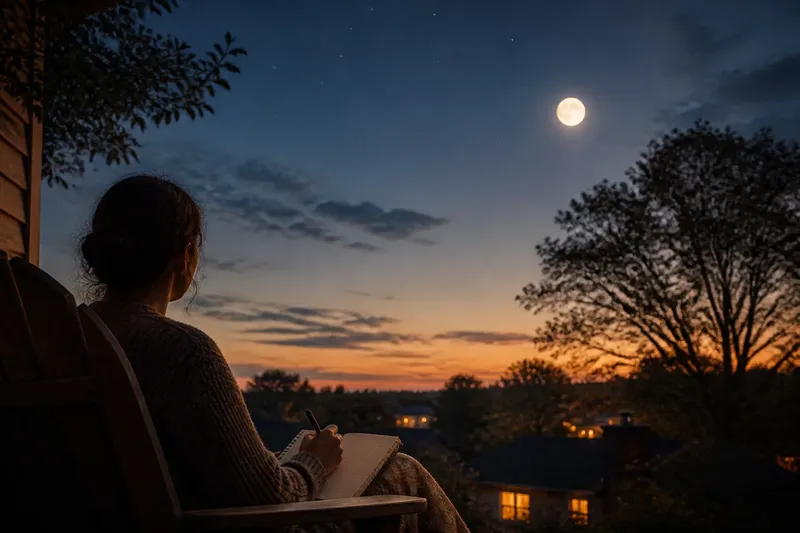
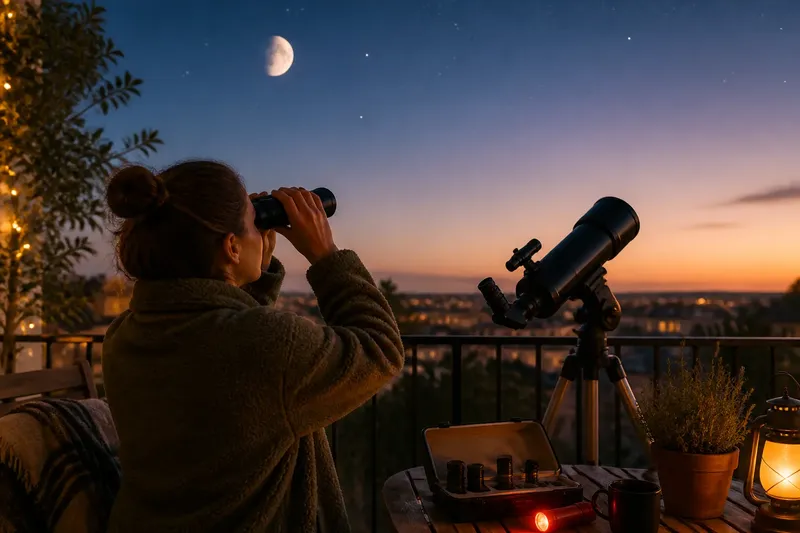
At dusk, the Moon may look crisp above the rooftops while the first stars seem hesitant to appear. A little later, the same patch of sky can feel brighter, flatter, or simply different. A moonlit evening for learning the sky’s changing light is less about identifying objects than returning to the same view and noticing what changes.
You do not need a telescope, a star chart, or a list of targets. Choose a comfortable place with an open view, then make a few quiet visits across one evening. The Moon is your reference point; your eyes, a small notebook, and the changing darkness are enough.
Choose a familiar view
Pick a spot where you can sit or stand comfortably and see a broad portion of sky. A backyard chair, a quiet park bench, or a window with the lights turned off can work. Avoid staring through glass if you can step outside safely: reflections and indoor light can make subtle changes harder to notice.
Before you settle in, note what blocks the view. A tree, roofline, or distant building gives your eyes a fixed edge to compare against. Keep your phone put away or dim its screen; bright displays interrupt the slow adjustment that helps fainter details emerge.
Choose a direction you can recognize without a compass, such as the side of the yard facing a familiar street. You are not trying to map the whole sky. The point is to return to the same frame and watch its appearance evolve.
Begin at dusk
Start when the sky is still visibly blue or gray and the Moon is easy to locate. Spend a few minutes looking broadly rather than fixing your gaze on the lunar disk. Ask yourself what the sky looks like as a whole: Is the color even, or does it fade toward the horizon? Are clouds visible? Does the Moon stand out sharply or blend into the bright background?
Write down a few plain observations, not interpretations. “Pale blue near the roof, lighter around the Moon” is more useful than “beautiful” if you want to compare later. You can also sketch the Moon’s position relative to the roofline or a tree branch. The sketch need not be accurate; it only needs to help you find the same view again.
If clouds drift across the scene, record that too. A passing cloud can make the Moon’s brightness seem to change, while a clear patch may reveal more contrast. Keeping weather in your notes helps separate a change in the sky’s conditions from a change in the way darkness is settling in.
Return after twilight
Come back after the sky has darkened further. Give your eyes a little time without looking at a bright screen, then compare the scene with your first notes. You may notice that the Moon now seems more brilliant against a darker background, while the nearby sky still looks washed with light.
Look for broad differences before trying to pick out individual stars. Does the lunar glow seem strongest close to the Moon, or does the whole visible sky feel bright? Are there darker regions between the glow and the horizon? The answers may be subtle, and they can vary with haze, clouds, and nearby outdoor lighting.
Try a brief glance away from the Moon, then look back. This gives you a chance to notice how your eyes respond to the darker areas without making the Moon itself the only thing you see. Avoid staring at it for a long stretch; a relaxed, wide view is better suited to noticing the surrounding sky.
Notice the changing light
Moonlight is reflected sunlight, but the experience of it depends on more than the Moon’s presence. The sky’s background brightness, local lights, thin haze, and cloud cover all affect what stands out. As twilight fades, stars that were hidden by the brighter sky may become visible, yet moonlit areas can keep the contrast gentler than on a dark, clear night.
Pay attention to contrast rather than counting stars. The Moon can make nearby sky look luminous and soften the distinction between dark and bright areas. Farther from it, some parts may seem darker by comparison. Your observing position also matters: a streetlamp behind you may affect your eyes even if it does not appear in the view.
Try looking at the same broad patch of sky during each visit, but let your eyes move naturally. Notice whether the background looks blue, gray, or nearly black; whether thin clouds show themselves; and whether the Moon’s glow seems to spread into the surrounding sky. These are observations, not a contest to see the faintest thing.
Keep a small observing record
A notebook page can hold the whole evening’s record. For each visit, jot down the approximate time in ordinary words, the sky’s color, cloud conditions, the Moon’s position in your view, and one change you notice. If you prefer a phone note, keep the screen dim and make the entry quickly before looking back up.
- View: Name a roofline, tree, or other fixed edge that frames the sky.
- Light: Describe the background as pale, gray, dark, or uneven.
- Weather: Note clear patches, haze, or moving clouds.
- Contrast: Record whether the Moon stands out sharply or seems to brighten nearby sky.
- Change: Write one difference from your previous visit.
Imagine you begin on a porch with the Moon above a maple tree. At dusk, you note a bright gray sky and no visible stars; later, you return to the same chair and see a darker background with a soft glow around the Moon. The useful result is not a claim that the Moon changed, but a record showing how the view changed as twilight, clouds, and your eyes shifted.
When should you look again?
How many visits make sense?
Three short visits can give you a useful comparison: one near dusk, one after twilight, and one later if you are still comfortable outside. You can add another glance whenever the sky changes noticeably, but there is no need to stay out until a particular object appears.
What if clouds cover the Moon?
Observe the cloud shapes and the brightness of the sky around them, then note that the Moon was obscured. If the clouds thin or move, compare the brighter and darker patches; if they remain solid, treat the evening as a lesson in how weather limits what you can see.
Can I observe from a window?
Yes, if that is the most comfortable option, but keep room lights low and watch for reflections. A window may soften contrast, so describe the view you actually have rather than trying to compare it directly with an unobstructed outdoor sky.
Does the Moon need to be full?
No. A crescent or half-lit Moon can still make a clear reference point, and the amount of illuminated lunar surface changes the scene’s appearance. Choose an evening when the Moon is visible from your chosen spot, then focus on the whole sky rather than on its phase alone.
Close with one comparison
Before heading inside, read your first note and add one sentence that compares it with the last view. Name a visible difference, such as a darker background, a new cloud band, or a glow that now seems more noticeable. If nothing obvious changed, write that honestly; a steady view is still a useful observation.
A moonlit evening for learning the sky’s changing light works best when you keep the routine easy enough to repeat. On another clear night, return to the same place and use the same plain descriptions. Over time, those modest comparisons can help you tell apart twilight, moonlight, cloud, and the effect of your surroundings—without turning a quiet evening into a hunt for targets.